 Exceptional Travel Expert
Great Migration safari in Tanzania: the short answer
The Great Migration safari is one of the most exciting things you can do in Africa. Every year, over 1.5 million wildebeest, plus hundreds of thousands of zebras and gazelles, travel in a giant circle across the Serengeti in Tanzania and the Masai Mara in Kenya. They follow the rain and the fresh green grass. The journey never stops. It goes on all year, every year.
People travel from all over the world to see this. Some come for the famous Mara River crossings, where thousands of wildebeest jump into crocodile-filled water. Others come for the calving season, when thousands of baby animals are born every single day on the open plains. Both are unforgettable.
This guide covers everything you need to know about planning a Great Migration safari in Tanzania, when to go, where to stay, what happens each month, how much it costs, and how to book. If you have questions after reading, contact our team here, and we will be happy to help.
| What you want to see | Best months | Where to be | When to book |
| Mara River crossings | July to October (peak August and September) | Northern Serengeti (Kogatende, Lamai) | July to October |
| Calving season | Late January to March (peak February) | Ndutu and the southern Serengeti | January to March |
| Grumeti River crossings | June to July | Western corridor | June to July |
| Quiet, good value | April, May, November, December | Central and southern Serengeti | Flexible year-round |
What Is the Great Wildebeest Migration?
The Great Wildebeest Migration is a year-round movement of millions of animals across the Serengeti-Mara ecosystem in East Africa. The herds travel in a big loop, from the southern Serengeti in Tanzania all the way north into Kenya’s Masai Mara, then back again. The total distance is about 1,800 miles (3,000 kilometers).
It is not just animals walking from one place to another.
It is a story of survival. Lions, cheetahs, leopards, and hyenas follow the
herds. Crocodiles wait in the rivers. The wildebeest face all of this every
single year just to find food and water. Every stage of the journey is dramatic
and exciting to watch.
- Animals: Over 1.5 million wildebeest,
200,000 zebras, and 400,000 gazelles
- Distance: About 1,800 miles (3,000 km) in a
circular route each year
- Location: Serengeti National Park, Tanzania
and Masai Mara, Kenya
- It never stops: The migration runs all year, there is no single start or end date
- Best highlights: Calving season (January–March) and river crossings (July–October)
For the full month-by-month timing breakdown, read our detailed Great Migration best time guide.
Do not plan around exact dates. The herds follow the rain, so positions shift by a few weeks from year to year. From November they move south through the Loliondo and Lobo areas, ready for calving from late January. Message us on WhatsApp for a current update before you book.
How many wildebeest are in the Great Migration?
The figure most guides quote is about 1.5 million wildebeest, joined by around 200,000 zebra and 400,000 Thomson's gazelle. That estimate comes from older aerial surveys. A 2025 study used AI-based satellite counts and found fewer than 600,000 wildebeest in August 2022 and August 2023. The researchers say this does not necessarily mean a collapse, because the two methods cover different areas and times. You can read more in this summary of the satellite study. Either way, it remains one of the largest land mammal movements on Earth.
Great Migration calendar: where are the herds each month?
| Month | Where are the herds? | What you will see | Crowds and cost |
| January to March | Southern Serengeti and Ndutu | Calving season, with predators on the short-grass plains | Moderate, good value |
| April to May | Central and western Serengeti | Long rains. Herds form columns and head north. Green and quiet, but muddy roads and some closed camps | Low season, lowest prices |
| June | Western corridor | Grumeti River crossings begin, and the dry season starts. | Rising |
| July | Northern Serengeti | Herds reach the Mara River, and the first crossings start. | High |
| August and September | Northern Serengeti and parts of the Masai Mara | Peak Mara River crossings | Peak, book 6 to 12 months ahead |
| October | Northern Serengeti, then heading south | Crossings still possible with fewer vehicles. Short rains start. | High to moderate |
| November and December | Southern Serengeti (returning) | Green landscape, good game viewing, fewer visitors | Low to moderate, good value |
Calving season: January to March (southern Serengeti)
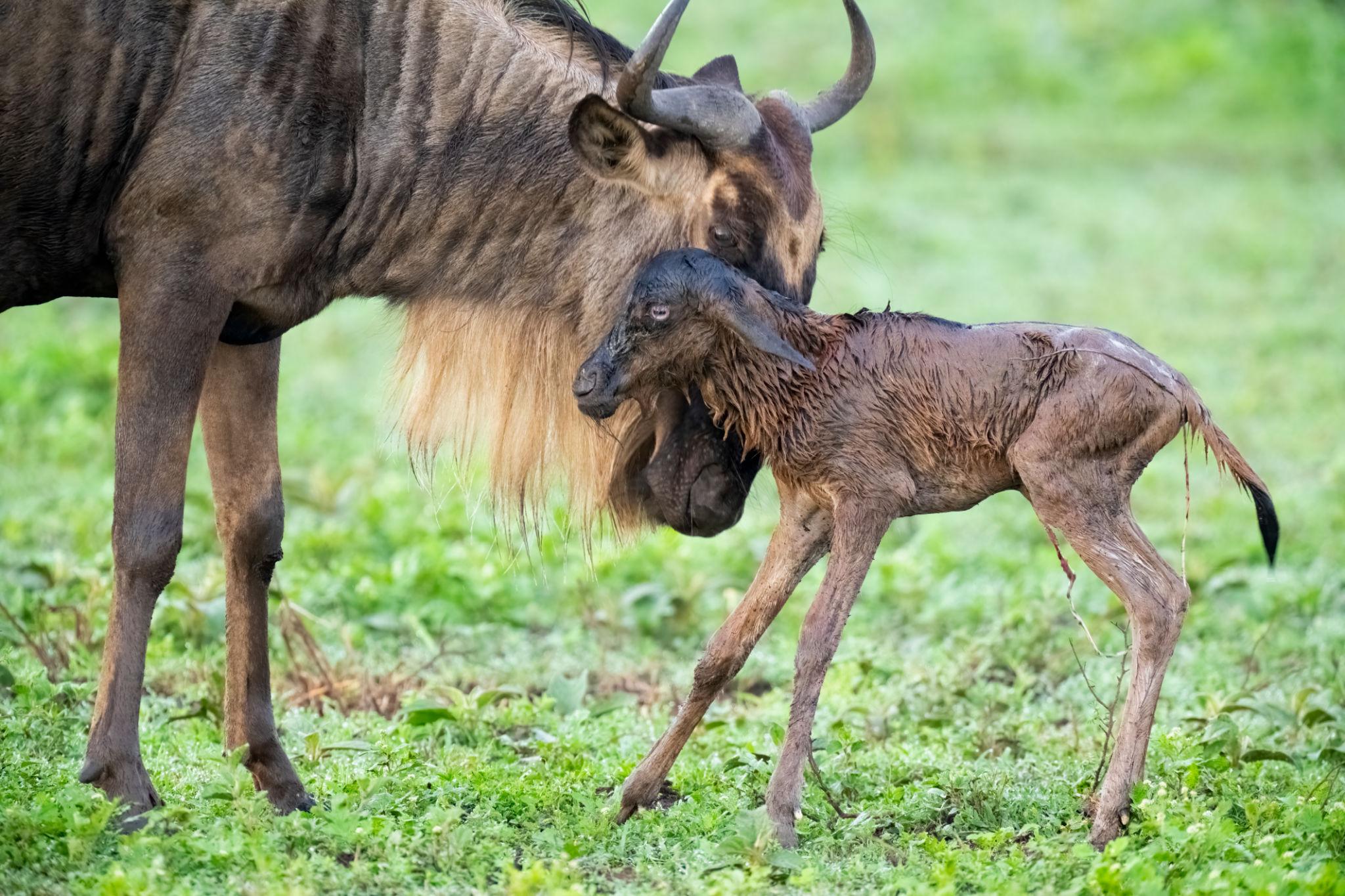
This is one of the most special times to see the Great Migration. The huge herds are in the short-grass plains of the southern Serengeti, in an area known as Ndutu. This is where the wildebeest give birth. About 8,000 baby wildebeest are born every day during this period, that is roughly one every ten seconds.
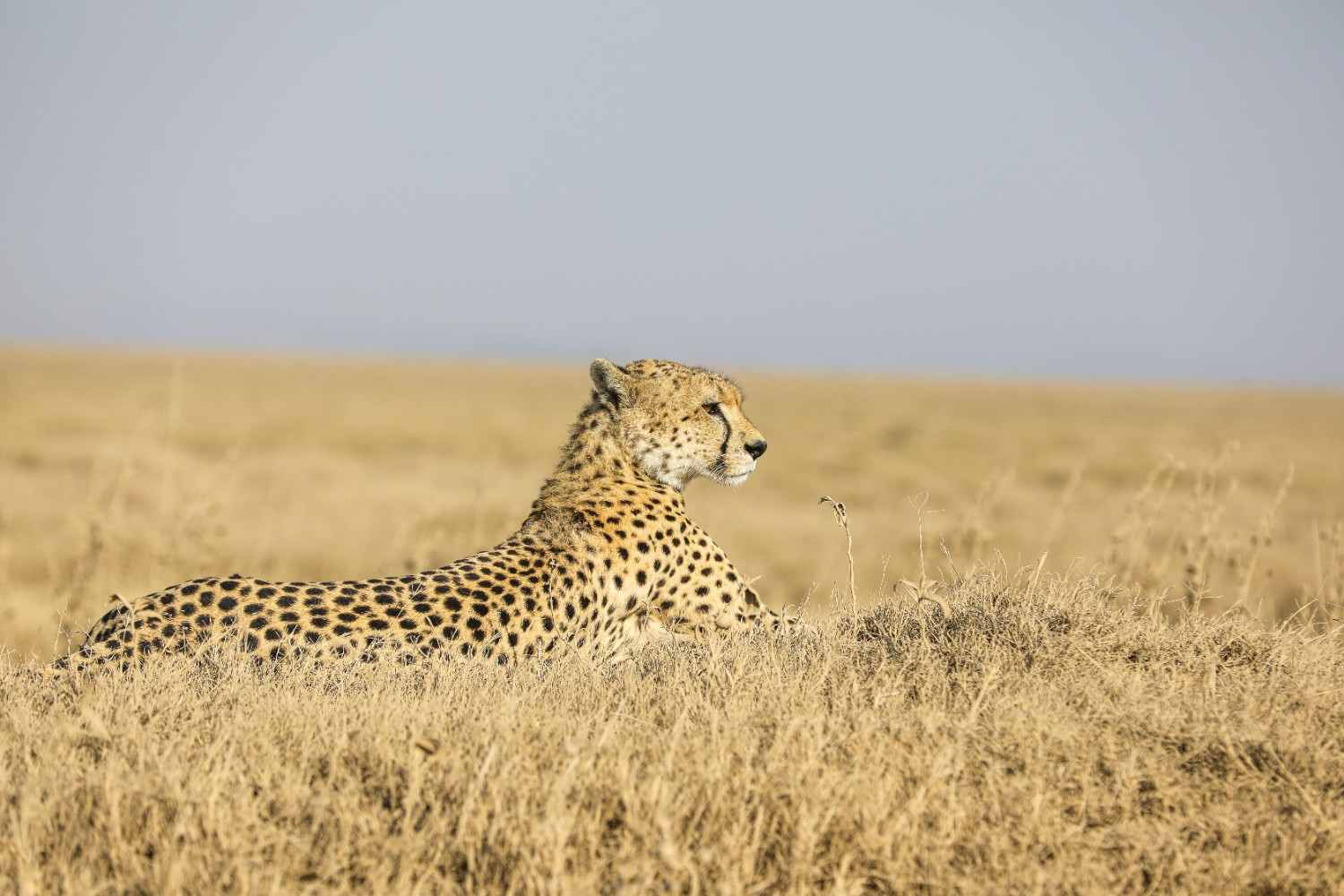
Baby animals attract predators. Lions, cheetahs, and leopards are everywhere during calving season. The grass is short, which means you can see the action from far away, and everything is clear. It is also a beautiful time of year, the plains are green and the light is soft.
This is a great option for couples. If you are also planning a Tanzania honeymoon safari, combining calving season in the Serengeti with a Zanzibar beach stay in January or February is one of the best trips you can plan.

April and May: the long rains
The rains arrive in April, and the herds begin moving north through the central and western Serengeti. The landscape turns very green, and the parks look beautiful. However, the roads become muddy and hard to drive on. Some lodges close during this period.
These are not the best months for a migration safari. We recommend avoiding April and May if possible, unless you specifically want a very quiet, green safari with very low prices.
June and July: Grumeti River crossings (western corridor)
By June, the herds reach the western corridor of the Serengeti. Here they must cross the Grumeti River. These crossings are not as famous as the Mara River crossings further north, but they are still very exciting. The Grumeti River has some of the largest crocodiles in Africa.
June is also when the dry season starts in earnest. The weather becomes sunny, the grass gets shorter, and wildlife sightings get better every week. This is a great time to book a Serengeti migration safari, the main crowds have not arrived yet, but the action is already building. Prices are also slightly lower than peak season.

July to October: Mara River crossings (northern Serengeti) - Peak Season
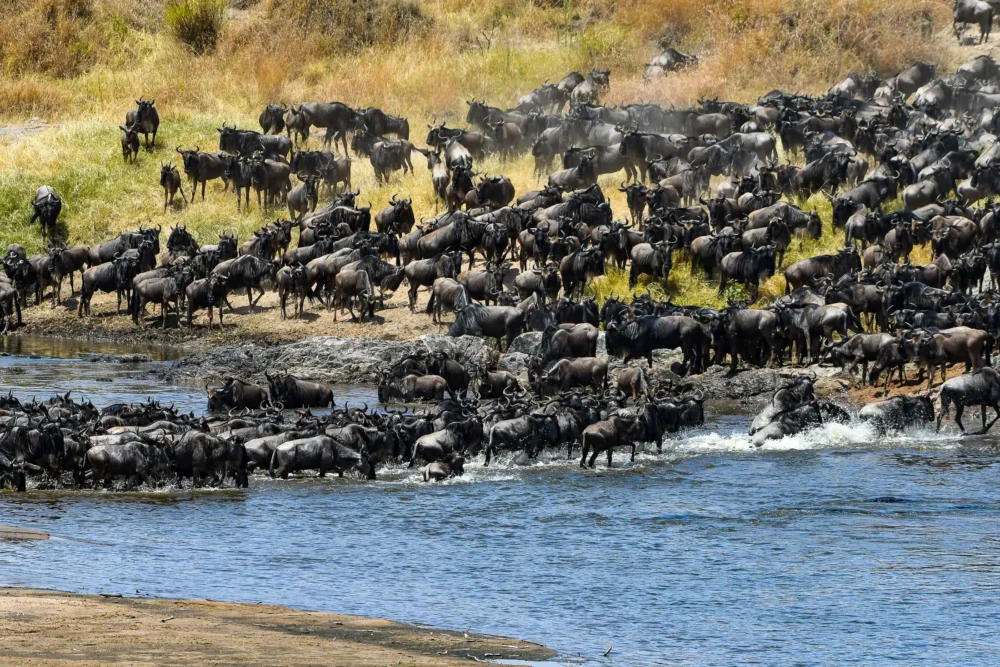
This is the moment most people think of when they hear Great Migration safari. The huge herds reach the northern Serengeti and must cross the Mara River to enter Kenya. The river is deep, fast, and full of very large Nile crocodiles. The wildebeest stand on the bank for a long time, sometimes hours or even days, before one of them jumps in. Then thousands follow all at once.
It is one of the most dramatic wildlife events anywhere in the world. The sound, the dust, the splashing water, the crocodiles attacking, it is impossible to describe how powerful it feels to be there.
July to October is peak season for the Great Migration. Lodges are at their most expensive and book up very fast. We strongly recommend booking your Great Migration safari packages at least 6 to 12 months in advance for this period. Check available dates & prices.
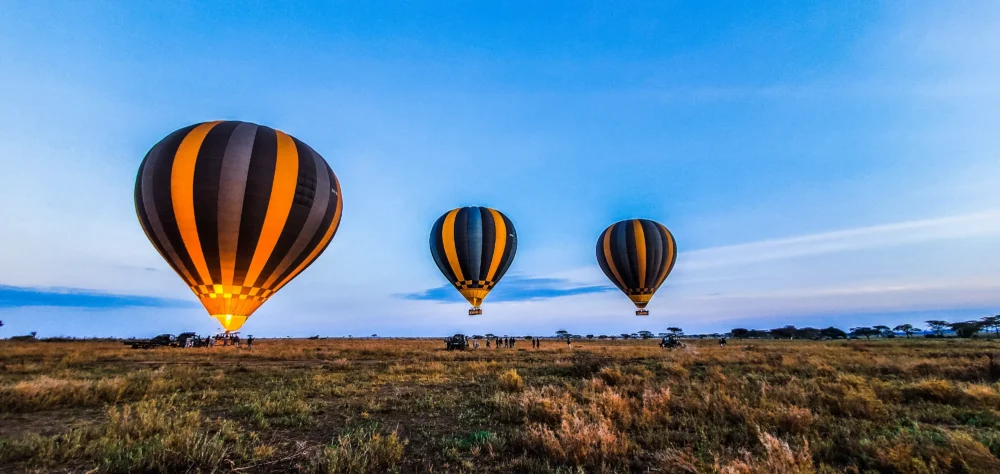
This is also an excellent time to add a hot air balloon safari over the Serengeti. Floating above the plains in the early morning while the herds are below you is something you will never forget.

November and December: Return South (Southern Serengeti)
The short rains arrive in November, and the herds begin moving south again, back towards the southern Serengeti plains. The landscape turns green again, and the game viewing is still excellent. There are fewer tourists during this time, which means a quieter and more private safari experience. Prices are also lower than peak season.
December is a great month for migration safari parks are open, the weather is mostly good, and you can often find better value on lodges. This is also a popular time for couples on a Tanzania honeymoon safari who are travelling over the Christmas and New Year period.
Serengeti or Masai Mara: where should you see the migration?
Both parks belong to the same ecosystem, but the herds spend most of the year in Tanzania. Only part of the herd crosses into the Masai Mara, usually from about August. Staying in the northern Serengeti gives you more time with the herds and fewer vehicles at each crossing. That is why we focus on the Tanzanian side.
Where to see the Great Migration Safari

Serengeti Central - Good for Budget and Year-Round Visits
The central Serengeti around Seronera is the most accessible area and works well for year-round game drives. Lodges here are generally more affordable than the north or south. If you are on a tighter budget, our Tanzania budget camping safaris are a great option that still gives you a real and memorable safari experience.
Great Migration safari packages
We can build any of these around your dates and budget. Prices are per person sharing.
See every option on our Great Migration safari packages page, or ask for a tailor-made quote.
How much does a Great Migration safari cost?
Cost depends on the season, the type and level of the accommodation , and the length of your stay. For a 7-day safari, budget travelers can expect roughly $2,500 to $5,000 per person. Mid-range lodges and private game drives run about $5,000 to $10,000. Luxury camps with private charter flights cost $10,000 to $25,000 or more. Peak crossing months from July to October are the most expensive, and the best luxury camps are often full 6 to 12 months ahead.
Park fees are a large part of the price. The published 2025/26 Serengeti rate for non-resident adults is about $83 per 24 hours, plus a concession fee of roughly $60 to $71 per night if you sleep in a lodge or camp inside the park. Children aged 5 to 15 pay less, and under-fives are free. Ngorongoro Conservation Area fees are separate. TANAPA reviews fees each July, so ask what your package includes and confirm the rate for your dates. Our Tanzania safari cost guide explains the full breakdown. For a personal quote, send us your travel dates.
Getting there and entry rules for a 2026/2027 safari
Fly into Kilimanjaro International Airport (JRO) for the northern circuit. From the US there are no nonstop flights, so expect one connection and about 17 to 26 hours of travel. We can help with flights and hotels. Once you are in Tanzania, a fly-in safari saves long road transfers between parks.
- Visa: US citizens pay $100 for a multiple-entry visa valid for 12 months, with up to 90 days per stay. Most other travelers pay $50 for a single-entry visa. Apply on the official Tanzania eVisa portal and read our guide to the $100 visa for US citizens.
- Mandatory entry insurance: Since 1 October 2026, most foreign visitors must hold inbound travel insurance. It costs $44 for adults and $22 for ages 3 to 17, and children under 3 are free. One policy covers the mainland and Zanzibar. Buy it from the official NIC portal if you enter through the mainland. It does not replace your own medical and trip insurance.
- Passport and health: Your passport must be valid for at least six months from arrival. A yellow fever certificate is needed only if you arrive from, or spend more than 12 hours in transit through, a risk country such as Kenya or Ethiopia.
Rules change, so confirm them before you travel. The US State Department publishes current Tanzania travel information.
What to combine with your Great Migration safari
Most travelers add one or two stops. Ngorongoro Crater holds one of the highest wildlife concentrations in Africa and sits a few hours from the Serengeti. Tarangire National Park is known for large elephant herds and baobab trees and works as a first or last stop near Arusha. For a beach finish, add three to four nights in Zanzibar with one of our safari and beach combinations. If you are also planning a climb, our Kilimanjaro climbing guide covers routes and costs. See all Tanzania safari destinations.
Great Migration safari FAQ
When is the best time to see the Great Migration in Tanzania?
It depends on what you want to see. For Mara River crossings, go between July and October, with August and September the busiest. For calving season, go from late January to March, with the peak in February. Read our full Great Migration best time guide for more detail.
Where is the Great Migration in October?
In October the herds are still in the far north of the Serengeti and the Masai Mara. The short rains usually start during the month and the herds begin to move south. The Tanzanian side is quieter than the Kenyan side, and crossings can still happen. Herds follow the rain, so exact positions change from year to year.
Where are the wildebeest from November to February?
From November the herds move south through the Loliondo and Lobo areas toward the southern Serengeti plains. By late January most of them are around Ndutu for calving.
Is a river crossing guaranteed?
No. The wildebeest decide when to cross and nobody can predict the exact day. Staying at least three nights in the northern Serengeti between July and October gives you a good chance of seeing at least one crossing.
How many wildebeest are in the Great Migration?
The long-standing estimate is about 1.5 million wildebeest, with roughly 200,000 zebra and 400,000 Thomson's gazelle. A 2025 satellite study counted fewer than 600,000 wildebeest in August 2022 and 2023. The researchers say this does not necessarily mean numbers have collapsed, and the method differs from the older aerial surveys.
Should I see the migration in the Serengeti or the Masai Mara?
Both are part of the same ecosystem. The herds spend most of the year in Tanzania, and only part of the herd crosses into Kenya, usually from about August. The Tanzanian side gives you more time with the herds, fewer vehicles at crossings and usually better value.
How many days do I need for a Great Migration safari?
Plan on at least five nights in the Serengeti. Seven nights gives you more flexibility and a better chance of catching a crossing. Add two to three nights if you want Ngorongoro Crater or Tarangire as well.
How much does a Great Migration safari cost?
Costs range from around $2,500 per person for a budget migration safari to $25,000+ per person for a luxury experience. The biggest factors are the time of year (peak season July–October is most expensive), the type of accommodation, and the length of your trip. See our Tanzania safari cost guide for a full breakdown.
Can I see the Great Migration on a budget?
Yes. Budget camping safaris reach the same parks and the same herds. You sleep in comfortable tents and drive in an open 4x4. Travelling in the green season or during calving season also lowers the price.
Do US citizens need a visa and insurance for a Tanzania safari?
Yes to both. US citizens pay $100 for a multiple-entry visa valid for 12 months. Since 1 October 2026, most foreign visitors must also buy mandatory inbound travel insurance, which costs $44 for adults and $22 for ages 3 to 17, with children under 3 free. One policy covers the mainland and Zanzibar.
What should I pack for a Great Migration safari?
Pack light, neutral-coloured clothes (khaki, green, brown, beige), a warm layer for cool mornings and evenings, a good camera with zoom, sunscreen, insect repellent with DEET, and a hat. See our Tanzania travel guide for a more detailed packing checklist.
Expert tips for your Great Migration safari
Book early for peak season. If you want the Mara River crossings between July and October, reserve your camp 6 to 12 months ahead. This matters more than any other tip.
Stay long enough in the north. The herds choose when to cross, so give yourself at least three nights in the northern Serengeti.
Fly between areas when you can. Tanzania is big, and bush flights save hours on the road for more time on game drives.
Pack light, neutral colors such as khaki, green, beige and brown, and a warm layer for cold mornings. Bring a camera with a good zoom lens. Our free safari packing list (PDF) covers the rest.